
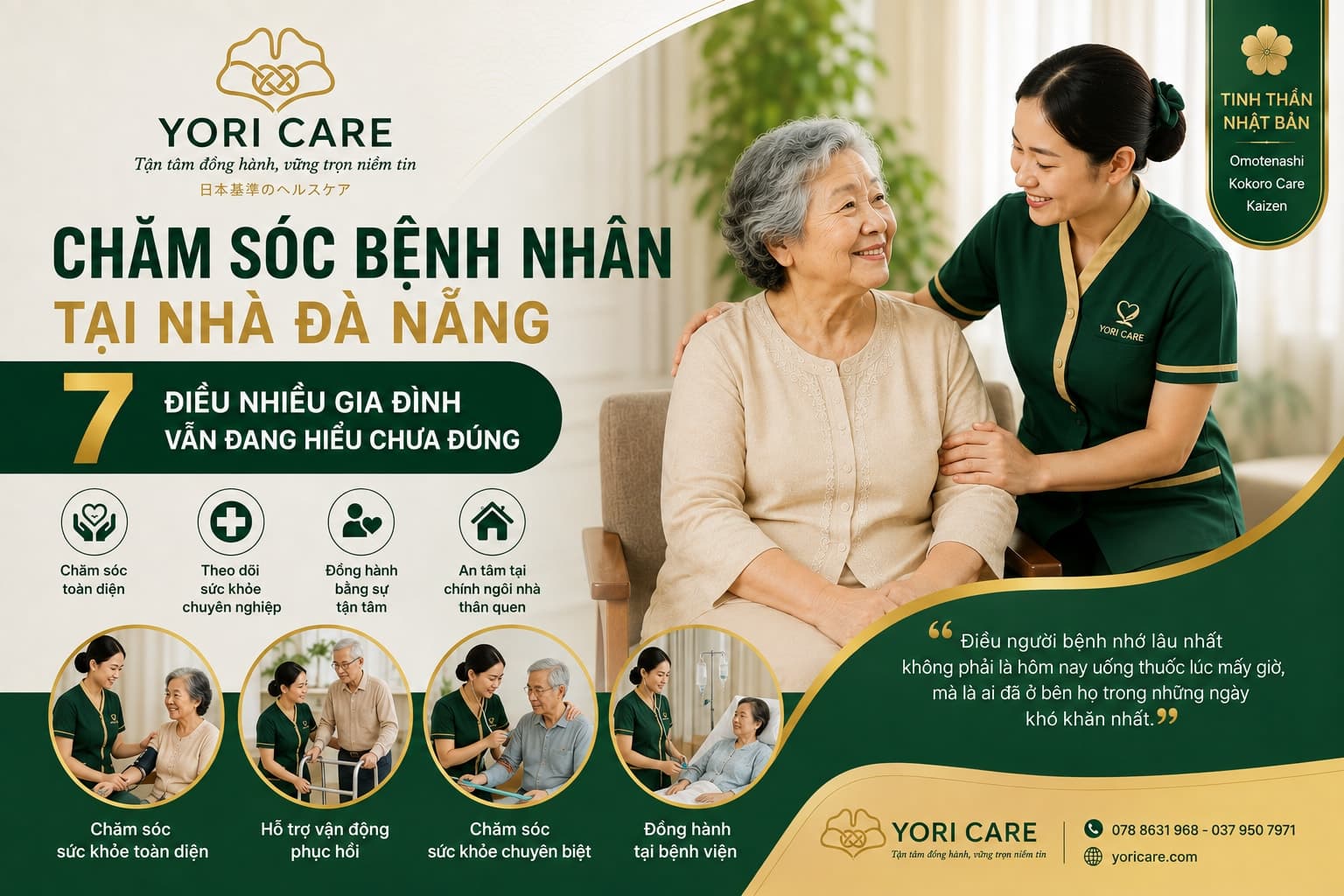
Home care in Da Nang: Seven common misconceptions
Read more →GÓC CHĂM SÓC
Home care for older adults in Da Nang
✍️ Admin Yori Care📅 12 Jul 2026⏱️ 6 min read
What does home care for older adults involve? Many families start asking this question when a parent gets older and needs more help with everyday tasks.
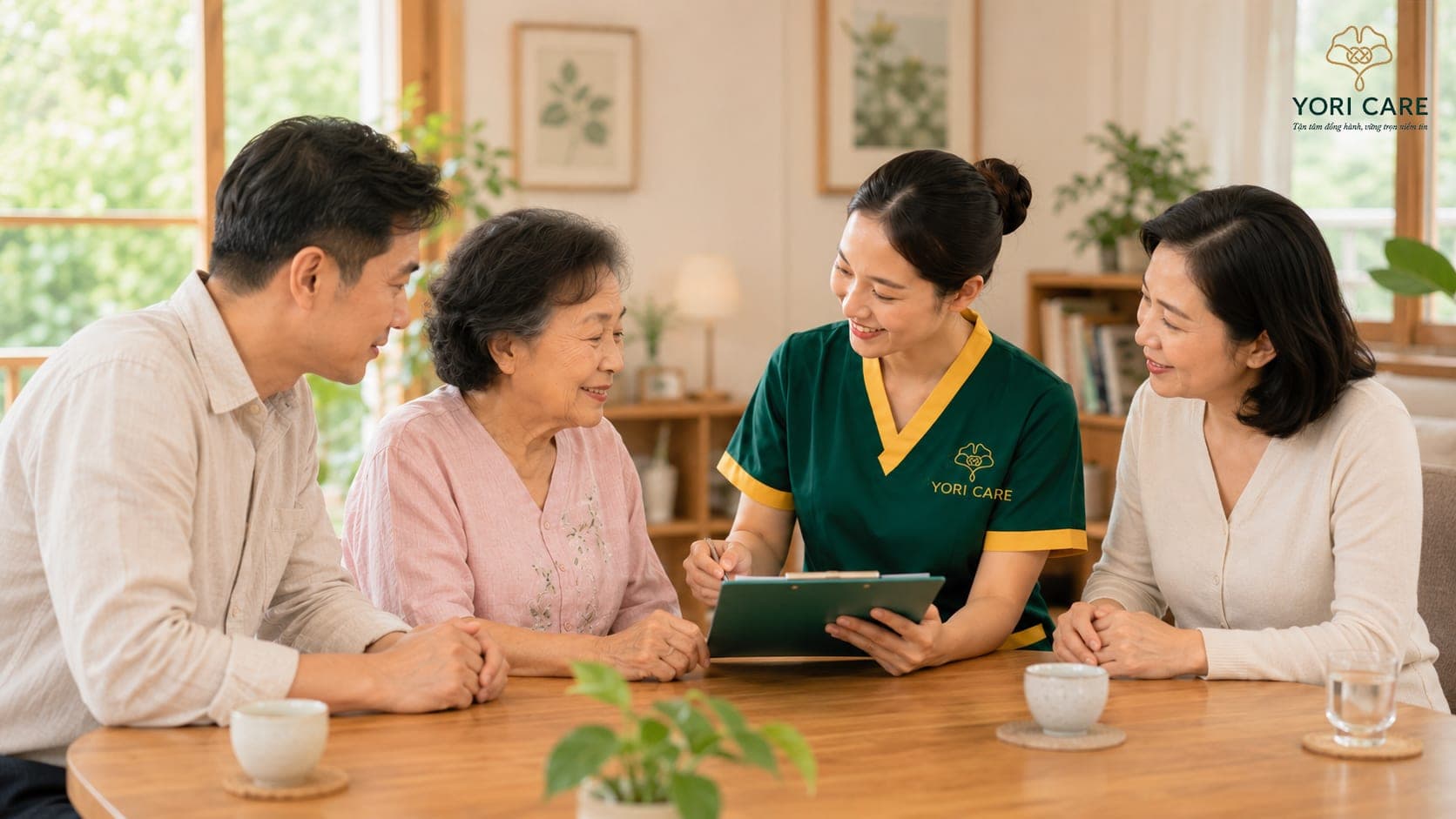
Good care includes treating illness and taking practical steps to help older adults stay physically and emotionally well. As an alternative to frequent hospital visits or a move into residential care, more families are choosing care at home so their parents can stay close to the people they love and the places that hold their memories.
Here, the Yori Care team explains what home care involves, who it can help and what families can expect from a provider.
What is home care for older adults?
Why are more families choosing home care?
As we age, getting around can become harder and our memory can change. The risk of a fall or a long-term health condition also increases.
At the same time, adult children may be balancing work, their own household and other commitments. Being with a parent all day is not always possible.
Home care can meet both needs. An older parent gets the support they need, while family members can go about their working day with greater peace of mind.
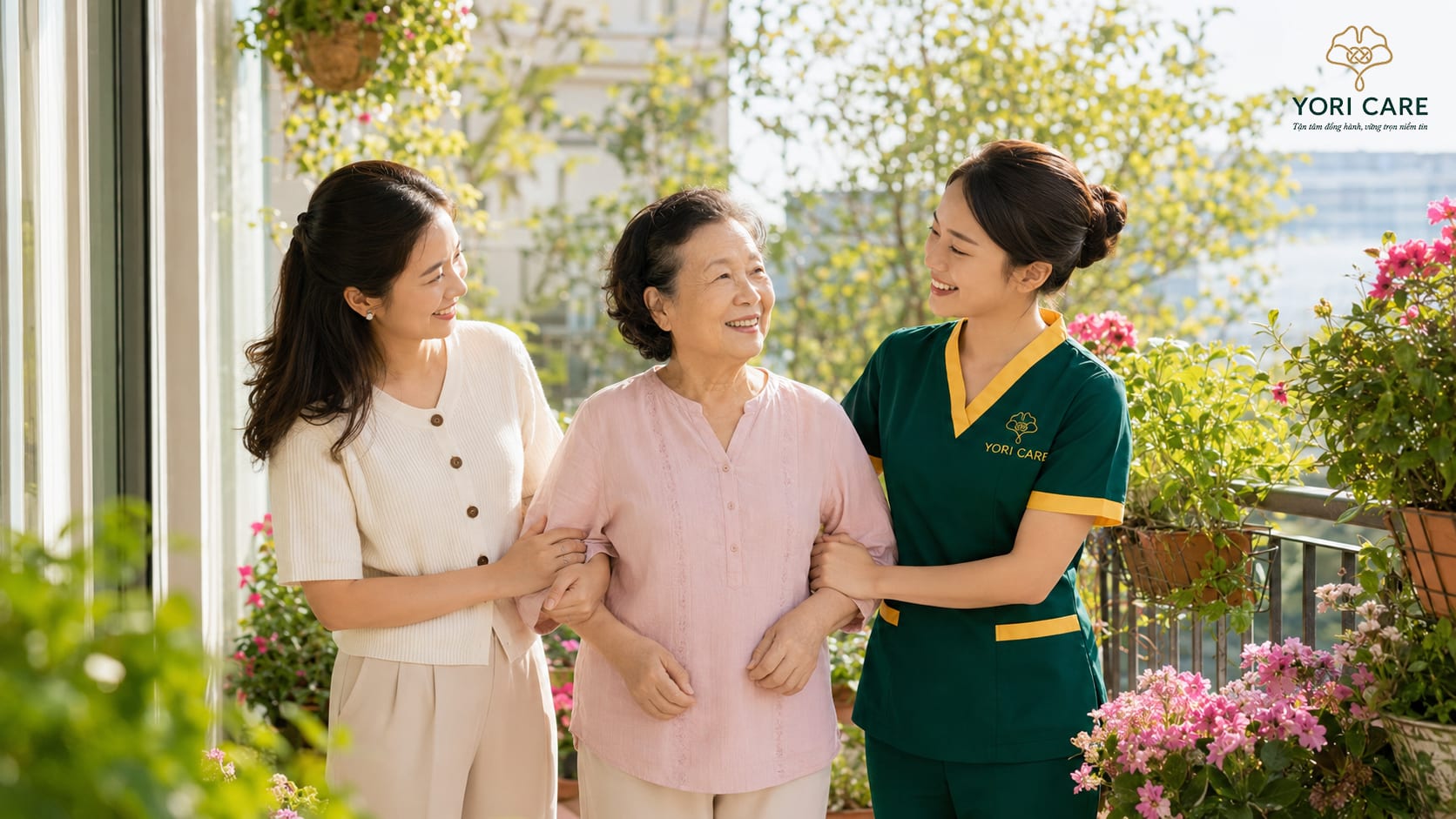
Research suggests that familiar surroundings can support emotional well-being in later life. A favourite chair, a small garden or a meal shared with family can give an older person a sense of calm and belonging.
Who can benefit from home care?
People with limited mobility are one group who may need support at home. Home care can also help in several other situations.
Older adults who live alone
A fall, a missed dose of medicine or a change in health can go unnoticed when someone lives alone.
People with long-term health conditions
People living with high blood pressure, diabetes, heart disease or another long-term condition may need regular health checks and support with daily activities to reduce the risk of complications.
People with reduced mobility
Someone who finds it difficult to walk, stand up or sit down, or who uses a wheelchair, may need a helping hand to move safely during the day.
People who need monitoring after treatment
Recovery often continues after someone leaves hospital. Depending on their needs, a nurse can work with the family to monitor their health and help with daily activities in line with their doctor’s instructions.
How can a home care nurse help?
Help with meals and personal hygiene is often the first thing families think of. A home care nurse can also help with other aspects of a person’s physical health and emotional well-being.
Everyday care may include:
Helping with meals, personal hygiene and dressing.
Helping the person move around safely and reduce their risk of falling.
Checking vital signs such as blood pressure, heart rate and temperature.
Reminding the person to take medicines as their doctor has directed.
Looking out for changes in health and letting the family know promptly.
Making time to talk and listen, and offering companionship to ease loneliness.
Supporting activities the person enjoys, such as reading, listening to music, taking a walk or doing gentle exercises suited to their abilities.
Many providers of home nursing care in Da Nang also give families regular updates, so they know how their parent is doing even when they cannot be there.
How home care can help
Keeping familiar routines
Most older people want to stay in their own homes. Familiar surroundings can help them feel safe and comfortable and spare them the adjustment of moving somewhere new.
Reducing the risk of avoidable hospital admissions
Regular monitoring can bring changes in health to the family’s attention early, giving them and the doctor a chance to respond promptly.
Supporting emotional well-being
Daily companionship can bring pleasure as well as practical support. A conversation, a favourite activity or simply having someone who listens can ease loneliness.
Easing the pressure on families
Whether family members are at work or live far away, they know someone is on hand to support their parent, notice changes and keep them informed.
What should families look for in a home care provider?
Look for a provider with clear procedures, well-trained staff and a consistent focus on the older person’s safety.
When you speak with a provider, ask about:
The nurses’ qualifications and practical training.
How the care team explains and records the care it provides.
How the team tailors its plan to the person’s health and needs.
How often the family receives updates.
How staff respect the person’s routines, preferences and feelings.
A provider who meets these needs can give your parent better day-to-day support and earn the trust of the whole family over time.
Yori Care’s Japanese approach to caring for older adults
At Yori Care, everyday support goes hand in hand with protecting each person’s independence, dignity and enjoyment of life.
Our nurses train in professional care procedures that combine health monitoring, practical help and emotional support. Our Japanese approach to care places particular value on attention to the small details. Clear updates about each person’s care help families understand how things are going.
If you are looking for home care for an older adult in Da Nang, the Yori Care team can listen to your concerns and talk you through the services that fit your family’s needs.
Frequently asked questions
How does home care differ from hiring someone to help with housework?
A domestic helper mainly handles household tasks. A professional home care team follows a care plan to monitor the person’s health, support daily living and offer companionship.
Does a family member need to stay at home with the nurse?
This depends on the family’s needs. A nurse can visit by the hour, work a shift or follow another schedule agreed in the care plan.
Can an older person in good health benefit from home care?
Yes. Home care can help an older person maintain their health, reduce everyday risks and enjoy regular companionship.
Choosing care that fits your family
Understanding what home care for older adults involves can help you choose the right support for your parent. Along with help with daily tasks and health monitoring, home care allows older people to stay in familiar surroundings, retain their independence and take pleasure in everyday life.
At Yori Care, we believe every older adult deserves care with compassion, understanding and respect. Our trained nurses draw on a Japanese philosophy of care to provide home care for older adults in Da Nang that is safe, professional and tailored to each family.
To talk about support for your parent, call Yori Care on 078.8631.968 or 037.950.7971, or book a consultation through our website. We will listen, talk you through the options and work with your family on a care plan that helps your parent feel well, secure and engaged in daily life.
Yori Care
Find the right care for your family
Discuss your family’s care needs in a free 30-minute consultation with our team.
Book a free consultation →